
Stratford Arrest Records and Charges
Town of Stratford County arrest records and court charge records are related, but they are not the same file. The arrest side may show the law-enforcement agency, date, report number, alleged incident, and records request channel. The court side begins when the prosecutor proceeds with formal charges in Superior Court. For Stratford, many first appearances, lower-level criminal matters, motor vehicle cases, and failure-to-appear issues route through GA2 at Bridgeport, while serious criminal cases can use Bridgeport Judicial District.
An arrest report is requested through the police records channel. A court charge is found through the Judicial Branch criminal and motor vehicle lookup. Custody after arraignment is checked through Connecticut DOC rather than a county jail roster, and the full court case outcome belongs in the Stratford criminal court records file. This distinction matters because one arrest can lead to no charge, one charge, several charges, amended charges, or a dismissed case.
Find Stratford Charges After Arrest
The official court-charge route is the Connecticut Judicial Branch Criminal / Motor Vehicle Case Look-up. Use pending case lookup for active charges, conviction lookup for disposed conviction records, docket-number lookup when the case number is known, and daily docket lookup for court appearances. For many Stratford arrests, start with Bridgeport Geographical Area 2. If the notice lists Bridgeport Judicial District or the case is more serious, search that court location.
- Open the criminal/motor vehicle lookup menu.
- Choose pending case by defendant for active charges or conviction search for disposed conviction records.
- Use last name, first initial, birth year, docket number, and court location filters where the form permits.
- Check Bridgeport GA2 first for many Stratford arraignments, misdemeanors, motor vehicle cases, and failure-to-appear events.
- Confirm charge status, disposition, and certified copies with the correct Superior Court Clerk when needed.
The Connecticut State Police reports and records page is a separate state-level report channel.
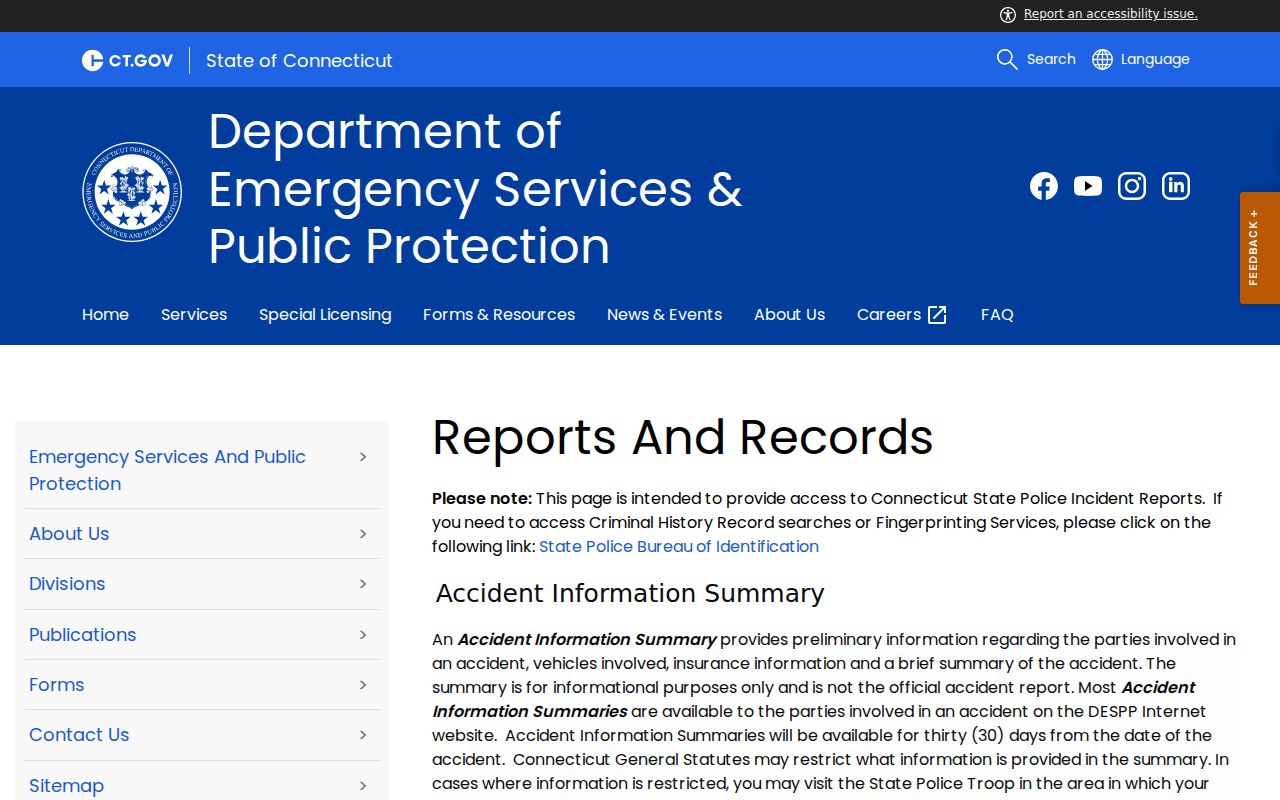
Use State Police report channels only when the incident or report belongs to State Police rather than Stratford Police or the court.
Charging Documents After Arrest
The court charge record starts with the charging decision. Connecticut's process and terminology should be read from the actual court docket, but the practical point is simple: the arrest report describes the police event, while the court charging document identifies the offense the prosecutor pursues in court. A charging document can be amended, reduced, nolled, dismissed, or resolved by plea or trial. Do not equate the first charge seen after arrest with the final conviction.
| Document | Who Files or Uses It | What It Does |
|---|---|---|
| Complaint | Law enforcement or prosecutor through the court process. | Starts or supports a criminal accusation after an arrest or summons. |
| Information | Prosecutor. | States the formal charge or amended charge being pursued in court. |
| Indictment | Grand jury or formal felony process where applicable. | Used for serious cases and should be verified through the actual court record. |
Stratford Charge Status Table
Charge status changes as the case moves. Pending status means the charge has not reached final disposition. Amended or reduced status means the charge changed from the original filing. A dismissal or acquittal means the charge did not end in conviction. A nolle prosequi is a prosecutor's decision not to proceed, and Connecticut erasure rules may later affect public access when statutory conditions are met.
| Status | What It Means | Where to Check |
|---|---|---|
| Pending | The court case or charge remains active. | Pending case lookup, daily docket, or clerk. |
| Amended | The filed charge changed from the original accusation. | Docket entries and clerk record. |
| Reduced | The charge severity or offense changed to a lesser charge. | Disposition entry and certified court record. |
| Dismissed | The charge was ended by the court without conviction. | Docket disposition and possible erasure review. |
| Nolle prosequi | The prosecutor declined to continue the charge. | Docket disposition and Connecticut erasure timing. |
| Convicted | The charge ended in a guilty plea, guilty finding, or verdict. | Conviction lookup, docket number search, or certified disposition. |
Stratford Arrest Records Requests
Stratford Police Records is the local channel for police reports and local arrest-report requests. The department page lists Stratford Police at 900 Longbrook Avenue, non-emergency phone 203-385-4100. The Records Unit page lists business hours Tuesday through Friday, 9:00 a.m. to 4:00 p.m., and records or FOI phone 203-385-4130. Police records are not the same as the Superior Court charge record, so a requester may need both channels for a full arrest-to-court history.
The Stratford Police records request form was listed in the research as a PDF, but its manifest image failed and is not used here. The research still supports the request path: local police report copies and FOI questions go to Stratford Police Records, while court charge status goes through the Judicial Branch and Superior Court Clerk. Evidence or property questions are separate from reports and may go to the police evidence contact listed in the research.
Stratford Police Records Unit
900 Longbrook Avenue
Stratford, CT 06614
203-385-4130
Tuesday-Friday, 9:00 a.m. to 4:00 p.m.
Warrants and FTA Charges
A warrant or failure-to-appear entry can be part of the arrest-to-charges path. The Judicial Branch criminal/motor vehicle lookup menu links an arrest warrant or violation of probation lookup, and pending cases or daily dockets can show related court activity. GA2 at Bridgeport lists Bail Services at 203-579-6582 and the Chief Clerk at 203-579-6568. Police records personnel cannot cancel a court warrant, and a person with an active warrant should verify through official court channels and legal counsel.
The Judicial Branch arrest warrant and VOP lookup is the official warrant-related search path captured for court charge research.
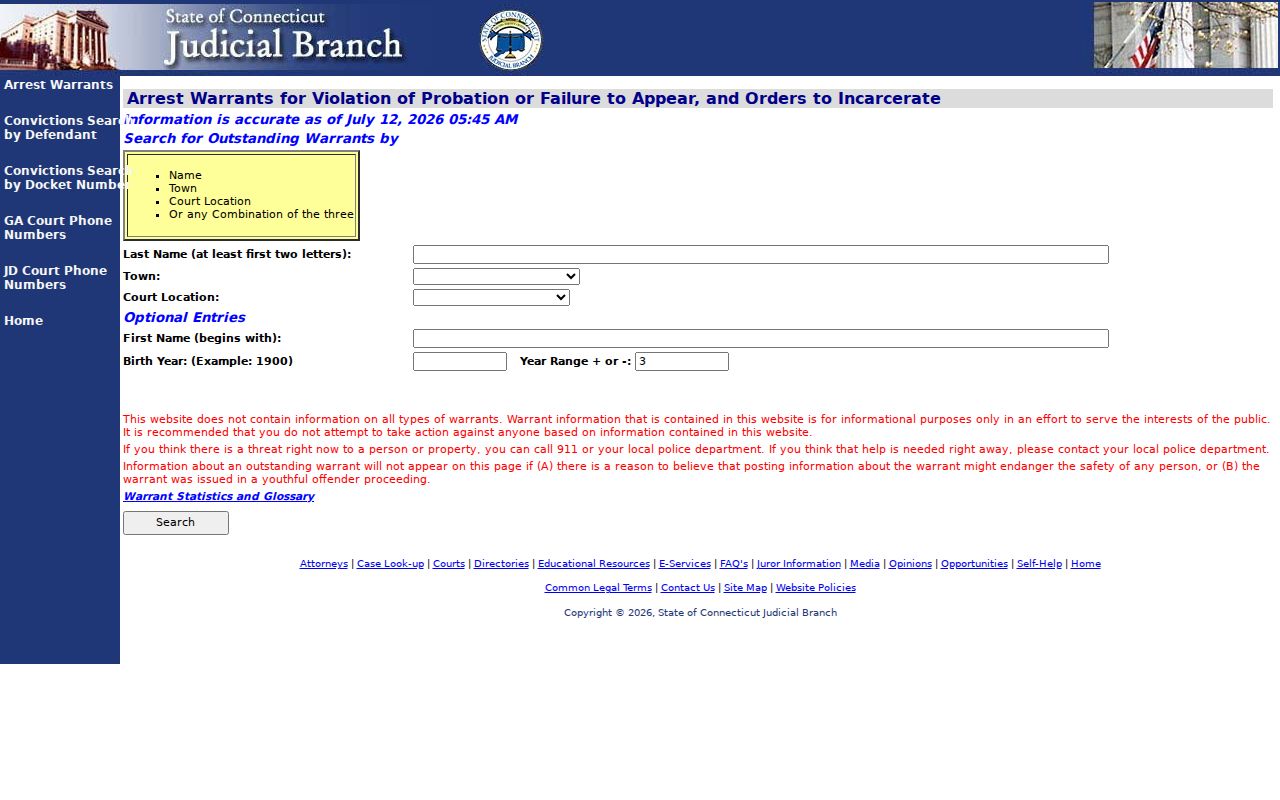
Warrant lookup should be paired with pending case and daily docket searches because warrant visibility can be limited.
Charges vs Convictions
Being arrested or charged is not the same as being convicted. A Stratford arrest record may exist because police made an arrest. A court charge may exist because the prosecutor filed or pursued an accusation. A conviction exists only after a guilty plea, guilty finding, or verdict. Public readers should not treat a pending charge, dismissed charge, nolle, or acquittal as a conviction.
| Charge | Conviction | |
|---|---|---|
| Meaning | An accusation filed or pursued in court. | A final guilty outcome by plea, finding, or verdict. |
| Record source | Pending case lookup, docket entries, charging documents. | Conviction lookup, docket disposition, certified clerk record. |
| Can change | May be amended, reduced, dismissed, or nolled. | May be appealed, corrected, pardoned, or erased if eligible. |
| Use caution | Does not prove guilt. | Still must be matched to the correct person and case. |
State Criminal History Checks
For formal statewide criminal-history information, Connecticut directs users to the State Police Bureau of Identification. A Judicial Branch docket search is a court-case lookup. A police report is an incident or arrest report. A State Police criminal-history check is a different channel that may include statewide repository information and fees. The Division of Criminal Justice criminal records page also points users to State Police for criminal record checks.
Use state criminal-history checks when a requester needs a statewide record rather than one Stratford arrest report or one Bridgeport court docket. A court erasure, pardon, correction, or sealed matter can affect what appears, so formal results should be read with the rules that govern the specific record source.
Sealed and Erased Arrest Records
Connecticut law restricts several arrest and charge categories. Juvenile matters are confidential except for specific statutory access. Youthful offender cases are not shown in the public criminal lookup. Connecticut erasure law can affect charges after dismissal, acquittal, a qualifying nolle, pardon, or clean-slate eligibility. Sealing restricts access by court process, while erasure changes public treatment of eligible criminal records.
| Sealed | Erased / Expunged | |
|---|---|---|
| Effect | Limits public access to a court file or document. | Changes public treatment of eligible criminal records under Connecticut law. |
| Route | Judicial Branch motion or court order. | Connecticut erasure statute, pardon, dismissal, acquittal, nolle timing, or clean-slate process. |
| Police reports | May still require separate review with the police custodian. | May require updates across court and state criminal-history systems. |
| Youth records | Juvenile and youthful offender records have separate confidentiality rules. | Public lookup exclusions do not always mean the record never existed. |
The Connecticut erasure statute source at Conn. Gen. Stat. Sec. 54-142a is central to dismissed, nolled, acquitted, pardoned, and eligible criminal records.
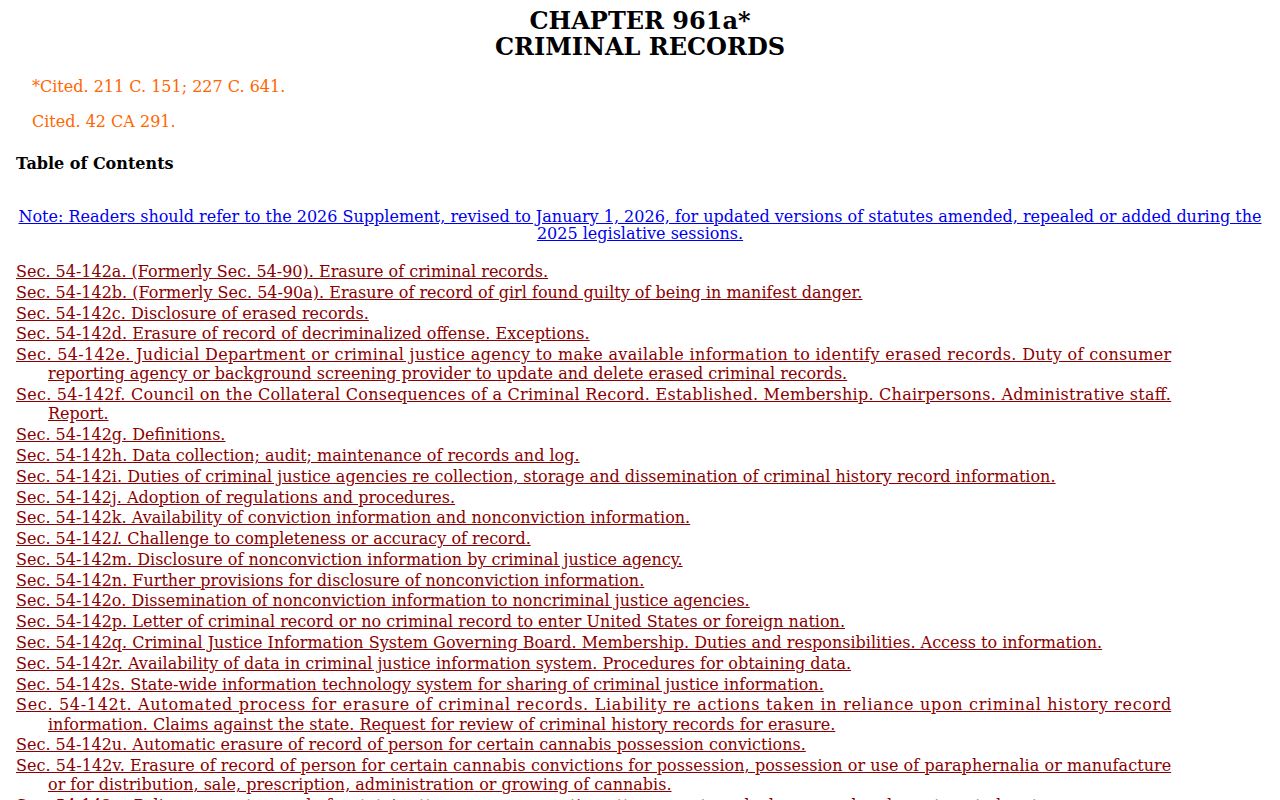
Erasure rules explain why a past charge may no longer appear in a public court or criminal-history lookup.
Juvenile confidentiality is separately addressed by Conn. Gen. Stat. Sec. 46b-124.
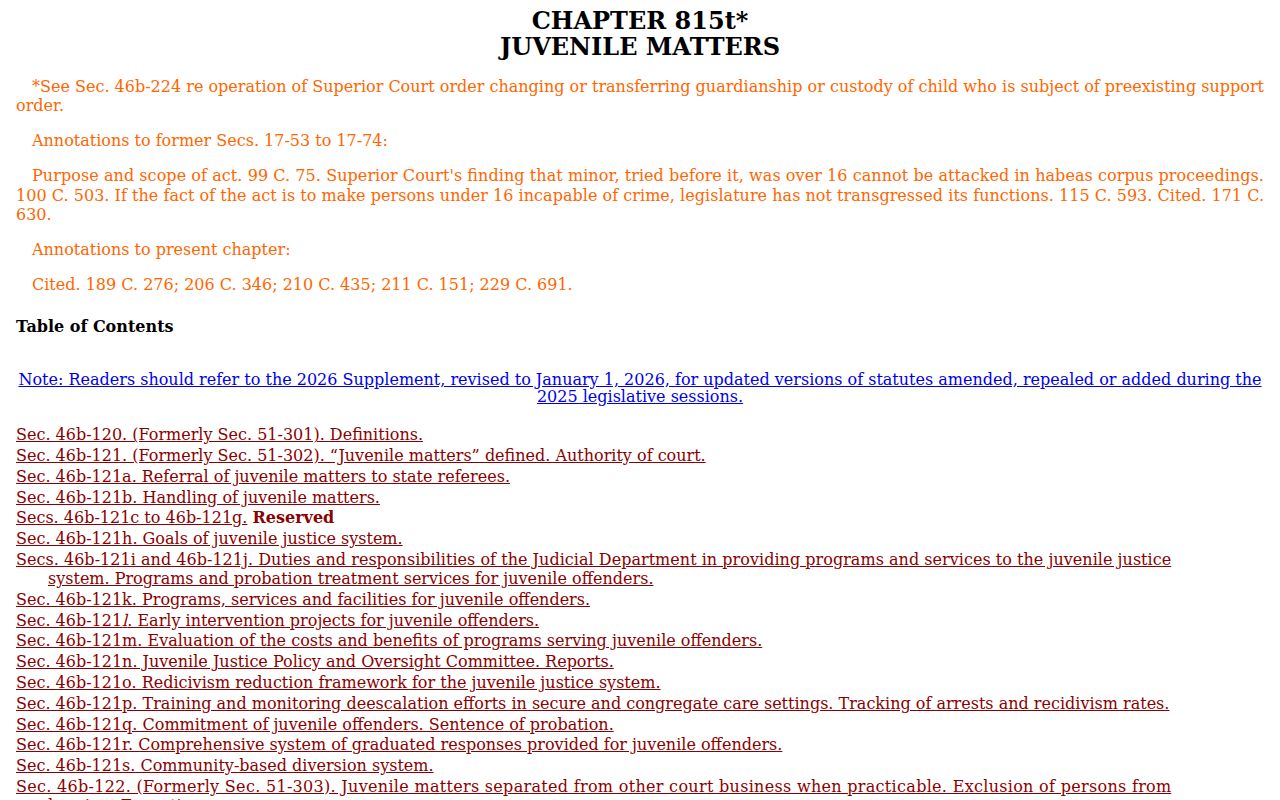
Juvenile and youthful offender limits are a major reason adult public court-charge searches do not show every arrest-related matter.
Note: A missing public charge result can mean wrong court, sealed access, erasure, juvenile status, or no filed court charge.
Public Record Search
Sponsored Results